
Social media pages have long been associated with unfettered and unfiltered posts based on opinion and hyperbole. But what happens when those opinions and hyperbole go too far. Is it just innocent banter or freedom of opinion.
Defamation
Defamation can effectively be summarised as the publishing of unproven facts that harm the image of a person or a business. This can occur through photographs, articles or spoken words.
In the context of social media, it can occur when something has been published on the internet [see Fairfax Media Publications Pty Ltd v Voller [2021]; this case identified that Facebook page administrators could be responsible for defamatory material published on their pages]. In short, defamation is not just confined to written statements.
How can I prove defamation?
For something to be considered defamatory it needs to meet certain criteria; such being:
- There has been a false statement of fact. Just because a statement is unkind does not necessarily mean they are defamatory in nature if they are still true;
- There has been publication;
- There has been identification;
- There is damage.
In most defamation matters, it is critical to prove that the defamation has caused serious harm to an individual’s or business’ reputation.
What if you publish something defamatory.
Understandably not all comments and statements are capable of being defamatory. Scrutiny is required to ascertain whether a statement is defamatory or not. The law also offers various defences. Three of the more commonly utilised are:
- Contextual truth.
- Honest opinion.
- Innocent dissemination.
Each carry their own peculiarities and requirements. For instance, a defence of honest opinion isn’t just a simple matter of saying “I believe” as factually it could still be incorrect.
Admins
Administrators of social media pages can be liable for post uploaded by third parties especially when they are notified of the offending content. In such instances, the administrator may be found liable unless they can prove that they did not know about the content or that they took reasonable steps to remove it. Social media defamation is often difficult to prove because one has to show the person or entity defamed actually suffered damage.
The takeaway
Be careful online about airing any grievance with a person or business via social media. Avoid making derogatory or harmful statements. Focus on discussing issues rather than attacking individuals, and use neutral, non-emotive language. Always verify the accuracy of your statements before posting and consider the potential impact of your words. Even if you have reasonable grounds the wrong language may land you in hot water.
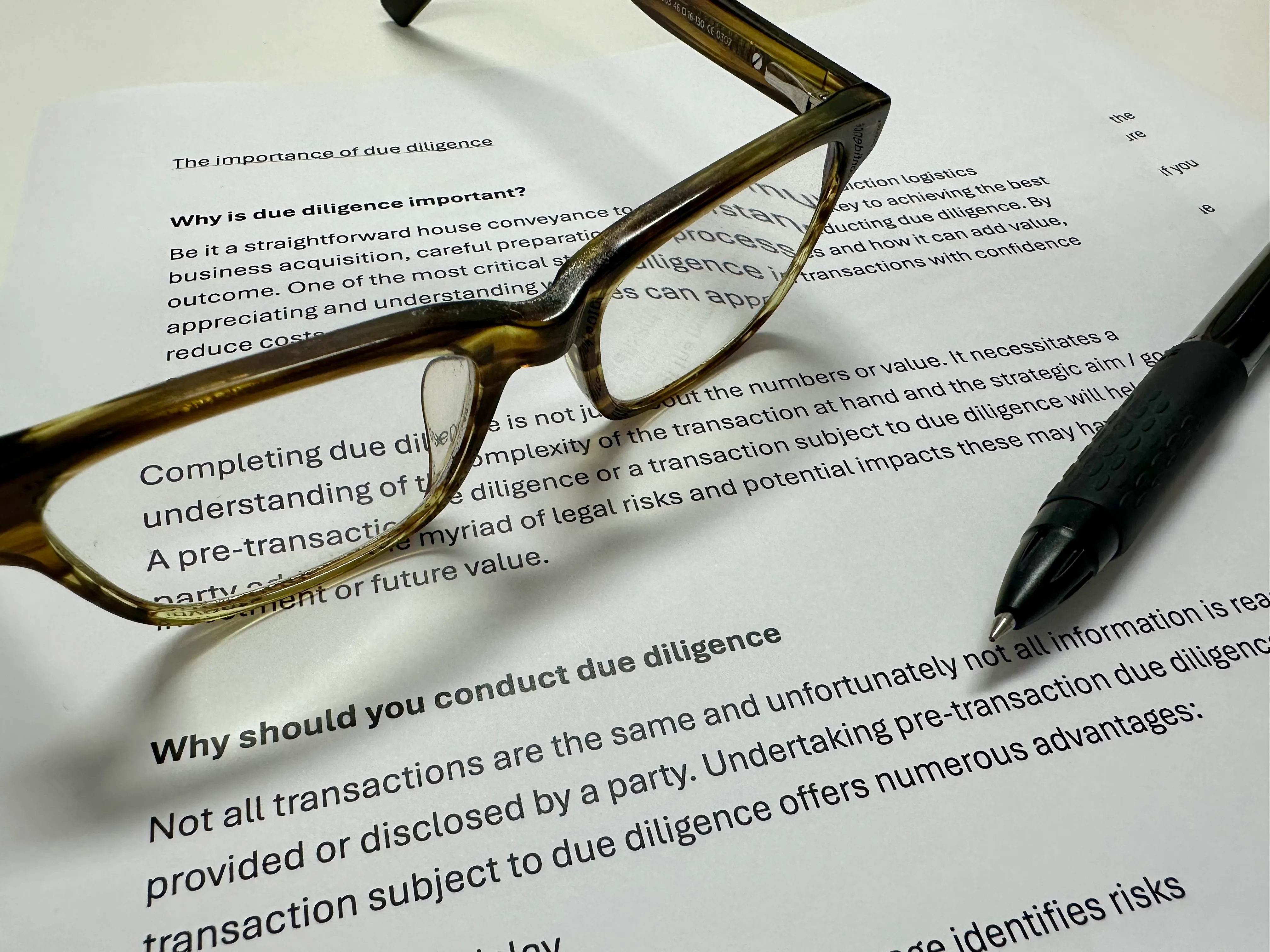
Why is due diligence important? Be it a straightforward house conveyance to a complex multi-jurisdiction logistics business acquisition, careful preparation and understanding is key to achieving the b
Read More
An important aspect of conveyancing in Queensland is providing a smoke alarm compliance certificate to the buyer before settlement. The certificate confirms that the property has smoke alarms which co
Read More
The classification of included chattels on a contract is a recurring topic of discussion among sellers, agents, and buyers. To provide clarity, consider the following guiding questions: If the house
Read MoreSuite 1, 272 Sturt St, Townsville, Q, 4810
Level 3, 240 Queen St, Brisbane, Q, 4000